Marion Typeface Review: Organic Fluidity for Retro Branding
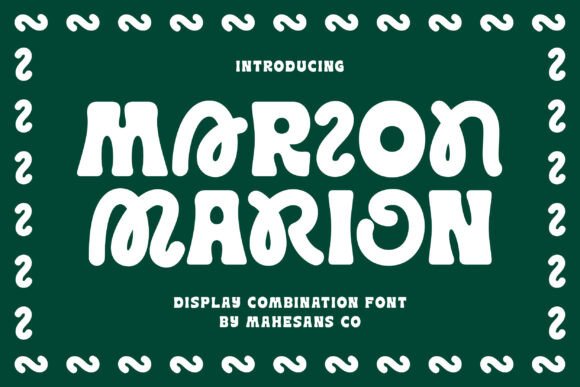
I opened a blank Figma file at 10 PM, staring at a half-finished brand board for a boutique skincare line. The client wanted "organic," "luxurious," and "retro," but every serif I tried felt too rigid, and every script felt too chaotic. That’s when I dragged in Marion. Within seconds, the entire mood of the project shifted. This isn’t just another decorative font; it is a unique and dynamic display font that merges organic fluidity with retro charm. Each character appears to ripple and melt, as if made from dripping paint or flowing liquid.
As a brand designer who tests typefaces across logos, packaging, and digital interfaces, I rarely get excited by new releases. But Marion feels like a solution to a problem many creatives face: how to add movement and personality without sacrificing legibility entirely. Below is my honest review of how this font performs in real-world branding scenarios, based on testing it across a complete visual identity system.
Marion Display Font for Boutique Skincare and Beauty Packaging
When I first placed Marion on a mockup for a luxury serum bottle, the effect was immediate. The way the letters seem to drip and flow mimics the texture of high-end creams and oils, creating an instant sensory connection for the viewer. Unlike standard serif fonts that sit flat on the page, Marion has a tactile quality. It looks wet, fresh, and alive.
In packaging design, space is premium. You need a headline that grabs attention from three feet away. Marion’s thick, fluid strokes command presence. I tested it alongside minimalist sans serif fonts for secondary information, and the contrast worked beautifully. The heavy, melting forms of Marion provided a perfect anchor against clean, functional typography. For beauty brands, wellness products, or artisanal cosmetics, this font communicates indulgence and natural ingredients simultaneously. It avoids the cliché of using overly curly scripts, offering instead a modern-retro aesthetic that feels sophisticated rather than nostalgic.
Logo Design Applications and Visual Impact
Using Marion for logo design requires careful consideration of scale and context. Because the characters have such distinct, irregular edges, they can become muddy if scaled down too small. However, for primary brand marks, especially those involving words like "Bloom," "Flow," or "Essence," it is striking. I experimented with kerning, pulling the letters slightly apart to let the negative space breathe. This prevented the "melting" effect from becoming a visual blob. When used correctly, Marion creates a memorable wordmark that stands out in crowded marketplaces. It works particularly well for cafes, spas, and creative studios looking for a handcrafted yet professional look.
Marion Typeface for Social Media Graphics and Digital Headers
Digital platforms demand quick readability, which often leads designers to default to safe, geometric sans serifs. But scrolling through Instagram or Pinterest, static text blends into the background. Marion breaks that pattern. Its dynamic shape acts as a visual interrupter. I used it for hero sections on a portfolio site and for promotional social media posts, where it added energy and movement to otherwise static layouts.
The font’s retro charm pairs exceptionally well with bold colors and grainy textures, popular trends in current web design. However, because Marion is a display font, it should not be used for body copy. I kept all paragraphs in a neutral sans serif, reserving Marion for headlines under five words. This hierarchy ensures that the user’s eye is drawn to the message without getting lost in the decorative details. For content creators, influencers, and digital marketers, Marion offers a way to inject personality into templates and branded assets without looking amateurish.
Font Pairing Strategies for Modern Typography Systems
To make Marion work effectively, you need a strong supporting cast. My go-to pairing was a clean, geometric sans serif like Montserrat or Helvetica Now. The contrast between the structured, straight lines of the sans serif and the organic, curving forms of Marion creates a balanced typographic system. Alternatively, pairing it with a classic editorial serif can enhance the retro vibe, suitable for magazine covers or long-form editorial design. Avoid pairing it with other display fonts or heavy scripts, as the competition for attention will clutter the design. The key is to let Marion be the star while the supporting fonts provide clarity and structure.
Limitations and Best Practices for Commercial Use
No font is a silver bullet, and Marion has specific limitations that designers must respect. First, its complexity makes it unsuitable for small sizes. If you are designing business cards, try to keep the font size above 14pt for the name/title to ensure the "dripping" details remain crisp. Second, avoid using it for long paragraphs of text. The irregular shapes cause eye fatigue quickly. It is strictly a headline and accent font.
Another critical consideration is licensing. Before using Marion in any client work, merchandise, or print-on-demand products, verify the commercial license. As a premium font, it likely comes with specific restrictions regarding the number of end products or web impressions. Using it without proper rights can lead to legal issues, especially for scalable brands. Always check the included file formats—ensure you have both desktop (OTF/TTF) and webfont (WOFF/WOFF2) versions if you plan to use it on websites. This ensures consistent rendering across different browsers and devices.
Testing Marion in Real-World Brand Identity Projects
Before committing to Marion for a final brand identity, I recommend printing physical proofs. Screens can distort the subtle gradients and curves of the typeface. Print a few variations on matte and glossy paper to see how the ink interacts with the surface. Does the "melt" hold up? Does it look too messy on textured stock? These tactile tests reveal nuances that pixels miss. Additionally, test the font in black and white. If the logo doesn’t work in monochrome, it may rely too heavily on color to compensate for weak form. Marion generally holds up well in grayscale, which is a good sign of structural integrity.
Ultimately, Marion is more than just a pretty typeface; it is a strategic design asset. It brings emotion, movement, and a distinct point of view to any project. Whether you are refreshing a local restaurant’s menu, launching a handmade jewelry line, or building a creative agency’s website, Marion offers a unique voice in a sea of generic typography. Just remember to use it sparingly, pair it wisely, and respect its boundaries. When done right, it transforms ordinary designs into memorable experiences.